Black Seed Extract comes from Nigella sativa, a flowering plant used in traditional health practices for centuries. Its small black seeds contain thymoquinone, a compound studied for antioxidant and anti-inflammatory activity. Today, people commonly take the extract in capsules, soft gels, oils, or measured drops. Some also use it in skincare products or add the oil to food.
But what is Black Seed Extract used for in modern wellness? Research has explored its possible role in supporting healthy inflammation, blood sugar, cholesterol, immune function, and respiratory comfort. Early studies are interesting, yet they remain limited. Results can differ because products vary in strength, purity, and preparation. Traditional use is meaningful, but it does not prove every advertised benefit.
The details matter.
A person may notice an oily taste, stomach discomfort, or skin irritation. Black seed products may also interact with medicines, particularly those affecting blood pressure, blood sugar, or clotting. Pregnant individuals, children, and people managing chronic conditions should seek professional advice before using it. Choosing a third-party-tested product can reduce contamination and labeling concerns, although it cannot guarantee effectiveness.
This guide examines common uses, potential benefits, safety considerations, and the quality of available evidence. It also separates promising findings from confident marketing claims. Black Seed Extract is not a replacement for prescribed treatment or a balanced diet. More well-designed human research is still needed, and that uncertainty deserves honest attention.
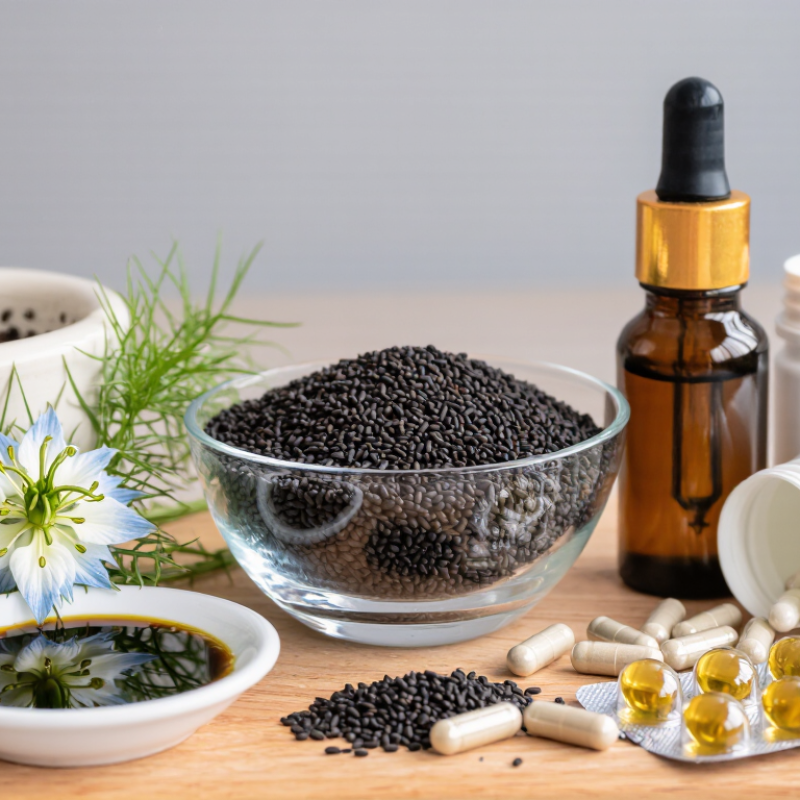
What Is Black Seed Extract?
What Is Black Seed Extract?
Black seed extract comes from the small, dark seeds of Nigella sativa. It is not simply ground seed powder. Manufacturers concentrate selected plant compounds using oil, alcohol, water, or other extraction methods. One widely studied compound is thymoquinone. Its amount can differ between products.
People use black seed extract for general wellness, digestive comfort, and interest in inflammation support. Some also apply diluted preparations to dry skin or the scalp. However, research in humans remains limited and uneven. Laboratory findings can look promising, but they do not prove a treatment will work for everyone. The picture is not perfectly clear. That matters when online claims sound certain.
Tips: Check the botanical name and extraction method. Look for testing information and clear serving instructions. Do not assume a stronger extract is better. Discuss regular use with a qualified healthcare professional, especially during pregnancy or when taking medicines. Black seed products may cause stomach upset or skin irritation in some people. A small patch test can be sensible for topical use. Personal experience can offer clues, but it cannot replace controlled research or professional advice.
What Is Black Seed Extract Used For?
Black seed extract, derived from Nigella sativa, is traditionally used for digestive discomfort, respiratory symptoms, skin concerns, and general wellness. Human research has also examined its possible effects on blood sugar, blood pressure, and inflammation. The chart presents the current evidence context rather than a treatment-effect score.
How to read the chart: Black seed extract has a long history of traditional use, while research in humans remains varied by health area. It should not be considered a proven treatment for any disease, and people taking medication or managing a medical condition should consult a healthcare professional before using it.
Key Compounds Found in Black Seed Extract
What Is Black Seed Extract Used For?
Key Compounds Found in Black Seed Extract
Black seed extract comes from Nigella sativa, a flowering plant used in traditional food and wellness practices. Its best-known compound is thymoquinone, an aromatic molecule studied for antioxidant and inflammation-related activity. Laboratory findings are interesting, but they do not prove that extracts treat disease in people.
The extract also contains nigellidine and nigellicine, alkaloids that may contribute to its biological effects. These compounds are being examined for possible antimicrobial, metabolic, and immune-related actions. The evidence remains uneven. Some small human studies suggest modest support for blood sugar, cholesterol, or inflammatory markers, but results vary between preparations. The picture is not perfectly tidy.
Black seed extract may also provide fixed oils, including linoleic and oleic acids. These fats help explain its traditional use in skin and dietary applications. Polyphenols and plant sterols add further antioxidant potential. However, processing can change the concentration of each compound. A dark, pungent extract is not automatically a stronger one. Read the ingredient panel carefully.
In practical use, people may take it as a capsule, liquid, or culinary oil. Personal experience can differ sharply. Some users report stomach discomfort or allergic skin reactions. Anyone using medication, managing a chronic condition, or considering pregnancy should seek qualified medical advice before supplementation. Evidence is promising, not conclusive.
Common Uses and Potential Benefits
What Is Black Seed Extract Used For?
Black seed extract comes from Nigella sativa, a flowering plant with small, dark seeds. People have used it traditionally in foods and herbal preparations for centuries. Modern research often examines thymoquinone, one of its main plant compounds.
Common uses
Common uses include supporting general inflammatory balance, blood sugar control, and healthy cholesterol levels. Some small studies have also explored its role in seasonal breathing discomfort and minor skin irritation. The evidence is promising, but uneven. Results can differ because extracts vary in strength, preparation, and dosage.
Black seed oil is sometimes applied to dry skin, where a few drops may feel soothing. Internally, capsules or liquid extracts are used, but more is not always better. Possible effects include stomach upset, dizziness, or allergic skin reactions. Rare reports have raised concerns about liver or kidney problems, although the overall risk remains unclear.
Important considerations
People taking diabetes, blood pressure, or blood-thinning medicines should speak with a healthcare professional before using it. Pregnancy and breastfeeding also require extra caution. A careful reader should question bold claims, especially promises to treat serious disease. I would not treat black seed extract as a replacement for prescribed care. Even natural products can interact with medicines, and product quality is not perfectly consistent.
Available Forms and Typical Ways to Use It
What Is Black Seed Extract Used For?
Available Forms and Typical Ways to Use It
Black seed extract comes from Nigella sativa, a flowering plant with small, dark seeds. It is commonly sold as whole seeds, ground powder, oil, liquid extract, and capsules. Each form offers a different experience. Whole seeds can add a peppery, slightly bitter flavor to bread, yogurt, soups, or roasted vegetables. Ground seed is easier to mix into food, but its aroma can become strong quickly.
Black seed oil is often taken by mouth in small amounts or applied to the skin. Some people massage diluted oil onto dry areas, although irritation can occur. Capsules provide a measured serving and avoid the taste. Liquid extracts may vary in strength, so following the product label matters. More is not automatically better. I would also avoid assuming that one form works like another.
Research has examined black seed compounds for antioxidant, inflammatory, metabolic, and respiratory support. The findings are interesting, but human evidence remains uneven. It is not a proven treatment for a diagnosed condition. People using blood pressure, blood sugar, or blood-thinning medicines should ask a healthcare professional before taking it. Pregnancy, breastfeeding, upcoming surgery, and seed allergies also require caution. Stop using it if a rash, stomach pain, dizziness, or breathing difficulty appears. Storage matters too. Keep oils away from heat and direct sunlight. My practical view is simple: treat it as a supplemental food product, not a replacement for qualified medical care.
What Is Black Seed Extract Used For? - Available Forms and Typical Ways to Use It
| Form |
What It Contains |
Typical Way to Use It |
Commonly Intended Use |
Important Considerations |
| Standardized capsules or softgels |
Measured black seed extract from Nigella sativa; the label may identify thymoquinone or a total extract amount. |
Taken orally with water and usually with food, following the product label. |
General dietary supplementation; studied for possible support of blood glucose, blood pressure, lipid levels, and inflammatory markers. |
Clinical evidence is limited and products vary in strength. It should not replace prescribed treatment. |
| Liquid extract |
A concentrated preparation intended for oral use; concentration can differ substantially between products. |
Measured with the supplied dropper or spoon and diluted if the label permits. |
Used when a flexible serving size or easier swallowing is preferred. |
Compare the amount per serving rather than the bottle volume. Do not assume a liquid extract is interchangeable with capsules. |
| Black seed oil |
Fixed oil pressed from black seeds; it contains fatty acids and naturally occurring compounds such as thymoquinone, but it is not the same as every concentrated extract. |
Used orally in a labeled serving or applied to intact skin after a small patch test, when the product is designed for topical use. |
Dietary use and traditional topical use for dry or irritated skin; research findings are still developing. |
Topical application may cause irritation or allergic contact dermatitis. Never use it in the eyes or on broken skin. |
| Powdered seed |
Ground whole seeds rather than a concentrated extract; naturally contains fiber, plant oils, and other seed constituents. |
Mixed into food or a beverage in the amount suggested on the package. |
Culinary use and traditional dietary supplementation. |
Its composition and strength are less standardized than a labeled extract, so results cannot be directly compared. |
| Tea or infusion |
Water-based preparation made from crushed or whole seeds; extraction of oil-soluble constituents may be limited. |
Consumed as a beverage after steeping according to a recipe or product directions. |
Traditional beverage use and flavoring; not equivalent to a standardized supplement. |
The active-compound content is not reliably known, and evidence from concentrated extracts should not be applied to tea. |
Safety note: Black seed products may cause stomach upset or skin reactions and may affect blood sugar, blood pressure, or blood clotting. Ask a qualified healthcare professional before use if you are pregnant or breastfeeding, have a medical condition, are preparing for surgery, or take prescription medicines.
Evidence note: Black seed extract is being studied for antioxidant, anti-inflammatory, metabolic, and cardiovascular effects, but available human studies are generally small or heterogeneous. It is not established as a treatment for any disease.
Safety Considerations and Possible Side Effects
What Is Black Seed Extract Used For?
Black seed extract, made from Nigella sativa, is commonly used for blood sugar, cholesterol, inflammation, and digestive concerns. Evidence remains uneven. A 2021 systematic review of 11 randomized trials in Complementary Therapies in Medicine reported modest improvements in glucose markers. However, the studies used different extracts and doses. That makes direct comparisons difficult. The evidence is promising, but not tidy.
Safety deserves closer attention. NCCIH notes that supplement research often lacks long-term safety data. Reported effects include stomach upset, nausea, dizziness, and skin irritation. Concentrated oil may also trigger allergic reactions, especially after topical use. LiverTox, a National Institutes of Health database, has not established black seed as a common cause of liver injury. Still, the absence of reports does not prove safety. Black seed may lower blood sugar or blood pressure, which could intensify diabetes or hypertension medicines. It may also affect blood clotting. People using anticoagulants should seek medical advice. Pregnancy, upcoming surgery, and chronic liver or kidney disease require extra caution.
Tips: Check the extract amount, not only “natural” wording. Choose products with independent testing for identity and contamination. Start cautiously, and avoid combining several new supplements. Stop use after facial swelling, breathing trouble, unusual bruising, yellow skin, or dark urine. A pharmacist can review possible interactions more reliably than a sales page.
Conclusion
Black Seed Extract is a concentrated preparation made from the seeds of Nigella sativa, a flowering plant traditionally valued for its nutritional and wellness properties. It contains naturally occurring compounds such as thymoquinone, essential oils, fatty acids, and antioxidants. These components have made black seed extract a subject of interest for supporting general health, immune function, healthy digestion, and the body’s natural response to oxidative stress and inflammation. However, individual results may vary, and it should not be considered a cure or replacement for professional medical care.
Black Seed Extract is available in capsules, liquid oils, powders, and blended supplements. It may be taken according to product directions, added to foods, or used as part of a daily wellness routine. Possible side effects can include stomach discomfort, nausea, allergic reactions, or changes in blood sugar or blood pressure. People who are pregnant, nursing, preparing for surgery, or taking prescription medication should consult a qualified healthcare professional before use.