Explore our core selection of active plant-based raw materials and dietary ingredients sourced and developed in our high-tech facilities.
An Industry Whitepaper on D-Mannose: Chemical Purity, Sourcing Logistics, and Formulation Innovations for Global Brands.
D-Mannose, a simple hexose sugar and an isomer of D-glucose, has transitioned rapidly from an alternative natural remedy to a scientifically validated, mainstream bioactive compound. Sourced primarily for its therapeutic role in urological health, bladder integrity, and glycemic control, D-Mannose is widely used across pharmaceuticals, functional foods, and nutraceutical formulations. For purchasing directors, contract manufacturers, and product innovators at global health companies, procuring premium-grade bulk D-Mannose is no longer just about cost-per-kilogram. It is a complex challenge encompassing raw material traceability, structural isomer purity, particle-size distribution, and strict compliance with international regulatory frameworks (FDA, EFSA, GMP, and KOSHER).
As a leading global extract provider, Nanjing Tong Rui Bio-Tech Co., Ltd. (TRB) has spent over 20 years engineering stable extraction and purification lines. By aligning our production capacities with strict quality controls, we ensure that bulk buyers receive biologically active, high-purity D-Mannose designed to withstand diverse processing conditions—from direct compression tableting to highly soluble effervescent drink formulations.
Information Gain Insight: Unlike D-glucose, which is highly absorbed by the human body and metabolized for energy, D-Mannose is absorbed slowly. Once ingested, a major portion is excreted unchanged via the kidneys into the urinary tract. Here, it acts as a molecular decoy for pathogenic bacteria (specifically Escherichia coli), preventing bacterial fimbriae from adhering to the bladder wall. This mechanical, non-chemical clearance mechanism prevents the development of drug-resistant pathogens, positioning D-Mannose as a vital alternative to standard antibiotic therapies.
The global market for D-Mannose is experiencing a steady compound annual growth rate (CAGR), driven by the growing consumer aversion to recurrent antibiotic use. The urology health sector is the primary driver, but emerging applications in prebiotic foods and companion animal health are expanding the demand curve.
The quality of bulk D-Mannose is determined by the method used to isolate and purify the molecule. The industry uses two main manufacturing pathways: chemical synthesis and enzymatic isomerization. Understanding these processes is critical for procurement managers seeking to balance purity, cost, and clean-label compliance.
| Parameters | Enzymatic Isomerization (TRB Advanced Route) | Chemical Synthesis (Traditional Route) |
|---|---|---|
| Raw Material Base | Non-GMO D-Glucose / Starch hydrolysates | L-Rhamnose or Aldol condensation chemicals |
| Chemical Reagents | Zero heavy metal catalysts. Uses biological enzymes | Lead/Molybdate oxide catalysts, organic solvents |
| Purity & Isomer Yield | ≥ 99.5% alpha-D-Mannose (high biological activity) | 98.0% - 99.0% (residual chemical isomers possible) |
| Environmental Impact | Low carbon footprint, biodegradable waste | Requires handling and disposal of hazardous waste solvents |
| Regulatory Acceptability | Highly favored for clean-label, infant food, & organic profiles | Subject to strict chemical residue testing and limits |
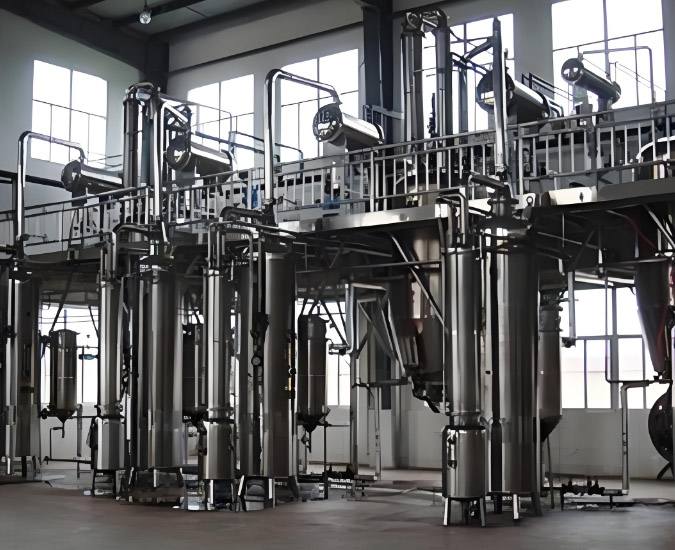
At TRB’s dedicated production plants, we prioritize the enzymatic pathway. Our specialized D-glucose isomerase conversion is followed by multiple rounds of active carbon decolorization, ion exchange demineralization, and precise crystallization. The result is a clean, white, crystalline powder free from chemical odors, with an alpha-anomer concentration optimized for maximum biological activity.
When drafting supply agreements with a D-Mannose factory, buyers must specify key quality benchmarks to avoid manufacturing downtime and ensure product safety.
Years Bio-Tech Experience
GMP-Compliant Factories
Export Countries & Regions
Global Biotech Award Winner
For more than two decades, Nanjing Tong Rui Bio-Tech Co., Ltd. has stood at the forefront of the global plant extract and bio-active ingredient sector. Combining advanced R&D with modern manufacturing facilities, we deliver high-purity raw materials to the health, pharmaceutical, and veterinary industries.
TRB operates three specialized production facilities: one dedicated to high-purity herbal extracts, a second focused on premium bee products, and a third specializing in animal-derived extracts. Our facilities hold international quality certifications, including GMP, ISO, HACCP, ORGANIC, FDA, HALAL, and KOSHER.
In recognition of our commitment to quality, research, and customer service, TRB was named the "Best Global Herbal Extract Provider 2026" at the Global Biotechnology and Life Sciences Awards. We continue to invest in clean extraction, purification, and customization technologies to support our clients' growth worldwide.


Standard, single-ingredient capsules are facing margin compression. Forward-looking brands are utilizing D-Mannose as a carrier or synergistic base for complex, multi-functional health formulations:
Navigating international custom corridors requires clean documentation. TRB provides a full set of regulatory paperwork with every shipment, including:
Comprehensive Document Pack: Certificate of Analysis (CoA) matched to batch numbers, Allergen Statements, Non-GMO Declarations, BSE/TSE-Free Declarations, and heavy metal/pesticide residue test reports from independent third-party laboratories.
We offer customs clearance support, flexible ocean/air freight options, and climate-controlled packaging (double-layer food-grade PE bags inside heavy-duty fiber drums) to ensure product stability during transport. Our logistics networks support deliveries to key hubs across North America, Europe, East Asia, and South America.
TRB’s long-term research is focused on the development of biological synthesis pathways using synthetic biology and cell-free multi-enzyme platforms. By optimizing enzyme stability, we aim to reduce energy consumption in the manufacturing process while increasing purity yields to ≥ 99.8%. Additionally, we are exploring the prebiotic benefits of D-Mannose on gut microbiota health, paving the way for next-generation synbiotic formulations.
Technical answers to common questions about D-Mannose sourcing, quality control, and manufacturing parameters.
Complete your sourcing portfolio with our wide range of GMP-certified botanical extracts, juice powders, and active molecules.
Phone: 86-25-52863298
Mobile: 86-13770771528
Fax: 86-25-52867040