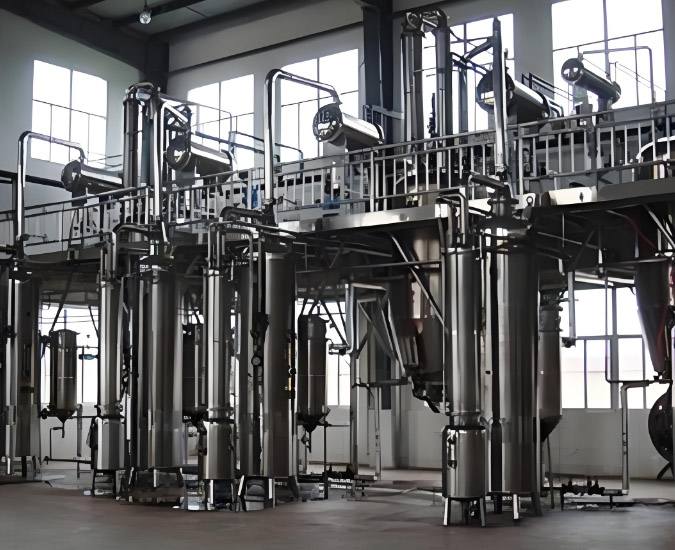
TRB seamlessly integrates vertical sourcing, innovative enzymatic synthesis, and robust chromatographic purification techniques to meet the increasing demand for active ingredients. TRB’s diverse product portfolio features Herbal extracts, Natural Sweeteners, Nootropics, Vegetable & Fruit Juice powders, Essential Oils, and Bee Products. This multi-disciplinary expertise has earned us the prestigious 2026 Global Biotechnology and Life Sciences Award — "Best Global Herbal Extract Provider 2026".
Operational Footprint: TRB currently operates three state-of-the-art production sites, including a dedicated herbal extract facility, a specialized bee product facility, and an advanced facility for animal-derived and bioprocessed compounds. Our infrastructure meets the stringent compliance metrics of GMP, ISO, HACCP, ORGANIC, FDA, HALAL, and KOSHER certifications, facilitating safe exports to over 60 countries and territories.
L-Carnosine (Beta-Alanyl-L-Histidine) is a naturally occurring dipeptide found in high concentrations in mammalian skeletal muscle, brain, and cardiac tissues. Formed through the condensation of beta-alanine and L-histidine, this molecule acts as an intracellular proton buffer, an anti-glycation agent, a heavy metal chelator, and a free-radical scavenger.
In recent years, the global market for L-Carnosine has transitioned from a niche sports nutrition ingredient into a mainstream bioactive active ingredient utilized in anti-aging skincare, therapeutic cognitive supplements, and metabolic health formulations. The primary driver is its ability to prevent the formation of Advanced Glycation End-products (AGEs), which damage tissue elasticity, cross-link collagen fibers, and accelerate degenerative cellular processes.
L-Carnosine sacrifices itself by bonding with reducing sugars, shielding proteins and DNA from carbonylation and preventing structural damage to vital cellular assemblies.
As a neuroprotective dipeptide, it crosses the blood-brain barrier to modulate neurotransmission, chelate transition metals, and clear toxic amyloid-beta proteins.
In sports performance, L-Carnosine stabilizes intramuscular pH by absorbing excess hydrogen ions ($H^+$) during high-intensity exercise, delaying muscle fatigue.
Historically, L-Carnosine was manufactured via classic organic chemical synthesis using protective group methodologies (e.g., phthaloylation or carbobenzoxy protection of beta-alanine followed by DCC-mediated coupling with L-histidine). While effective for generating volume, this pathway often leaves traces of hazardous organic solvents (such as dimethylformamide, dichloromethane) and is susceptible to racemization, yielding D-Carnosine impurities.
TRB has pioneered a clean, green bio-enzymatic synthesis process. By utilizing highly selective peptide ligases or recombinant microbial platforms, we assemble L-Carnosine under mild aqueous conditions. This eliminates toxic catalysts, ensures zero D-isomer cross-contamination, and generates a pure, white crystalline powder with superior organoleptic properties.
| Specification Parameter | Industry Standard (Chemical Synthesis) | TRB Premium Standard (Enzymatic Bio-Synthesis) | Testing Methodology (USP/EP) |
|---|---|---|---|
| Assay (dry basis) | 98.0% - 101.0% | 99.5% - 101.0% | HPLC / Acid-Base Titration |
| Specific Optical Rotation | +20.0° to +22.0° | +20.5° to +21.5° | Polarimetry |
| pH (1% aqueous solution) | 7.5 - 8.5 | 7.8 - 8.4 | Potentiometric measurement |
| Heavy Metals (as Pb) | < 10 ppm | < 5 ppm (typically undetected) | ICP-MS |
| Loss on Drying | < 1.0% | < 0.5% | Gravimetric (105°C, 3 hrs) |
| Residual Solvents | Meets ICH limits (DMF/Toluene/DCM) | Ethanol only / Solvent-free | Headspace Gas Chromatography (GC-HS) |
When sourcing L-Carnosine on a B2B level, quality assurance teams must verify critical metrics to prevent product degradation, formulation incompatibility, or regulatory non-compliance. TRB suggests checking the following points prior to volume procurement:
Ensure your supplier verifies optical rotation. If D-Carnosine is present, the metabolic efficiency of the peptide drops, and it can inhibit natural tissue carnosinase enzymes. TRB maintains a chiral-pure L-enantiomer profile via chromatographic verification.
Capsule filling and tablet compaction require controlled bulk density (0.45–0.60 g/mL). For cosmetic applications, a micronized powder ensures fast dissolution in the water phase. We customize mesh sizes from 80 mesh to 200 mesh.
Due to its strong chelating ability, raw L-Carnosine can bind environmental lead, arsenic, and mercury during processing. Our production line uses glass-lined reactors and sub-micron filtration to keep heavy metals below strict limits.
Regulatory compliance is key for entering global health product markets. TRB supports corporate buyers with comprehensive documentation, including Kosher, Halal, ISO, HACCP, GMP, and FDA registration details. Whether you are formulating in the United States, Europe, Japan, or South America, our technical dossiers ease regulatory submissions.
For cosmetic formulations (INCI: Carnosine), we supply raw material dossiers free of animal derivatives, GMOs, and petrochemical solvents. This aligns with Clean Beauty standards and vegan certification parameters. In dietary supplements, TRB’s material complies with USP and European Pharmacopoeia (EP) monograph baselines, facilitating entry into mainstream pharmacy chains.
Leveraging two decades of export experience, TRB coordinates customs protocols, provides certified Certificates of Analysis (COA) per batch, and offers flexible shipping options (air, sea, express) to over 60 countries. We utilize high-barrier, double-PE food-grade bags packed inside reinforced cardboard drums to prevent moisture absorption during transit.
The future of L-Carnosine lies in synergistic combination technologies and advanced delivery mechanisms. TRB’s research division is actively developing solutions to two primary challenges in peptide application: oral bioavailability and topical skin penetration.
Developing structural variations and co-formulations that temporarily shield the dipeptide from rapid degradation by carnosinase enzymes in blood plasma.
Utilizing lipid bilayers to carry L-Carnosine deep into the dermis for cosmetic formulations, enhancing its anti-glycation and anti-wrinkle efficacy.
Expanding our synthesis of Zinc L-Carnosine complexes, which target mucosal lining repair in the gut, responding to the growing demand for digestive health support.